Understanding Kyphosis
Kyphosis is a spinal condition characterized by an exaggerated rounding of the upper back, often presenting as a "slouched" or hunched posture. While a standard thoracic spine measurement typically ranges between 20° and 45°, any curve exceeding 45° is classified as hyperkyphosis.
Kyphosis can develop independently or alongside scoliosis, and generally falls into one of two primary categories:
• Postural Kyphosis: This common form is typically caused by weak, overstretched spinal muscles. Because the spinal structure remains flexible, patients can usually improve or correct the curve actively through targeted posture retraining.
• Scheuermann’s Disease: As the most severe form of kyphosis, this structural condition is caused by a change in the shape of the vertebrae themselves. In a growing child, the front of the vertebrae develops more slowly than the back, causing the bones to wedge and the spine to collapse forward. Because children with Scheuermann’s are highly vulnerable to rapid progression, it is critical to counteract this asymmetric loading during periods of active growth.
Fortunately, both postural kyphosis and Scheuermann’s disease can be highly responsive to conservative treatment using the Schroth method.
Both types of kyphosis can be treated with the Schroth Method.
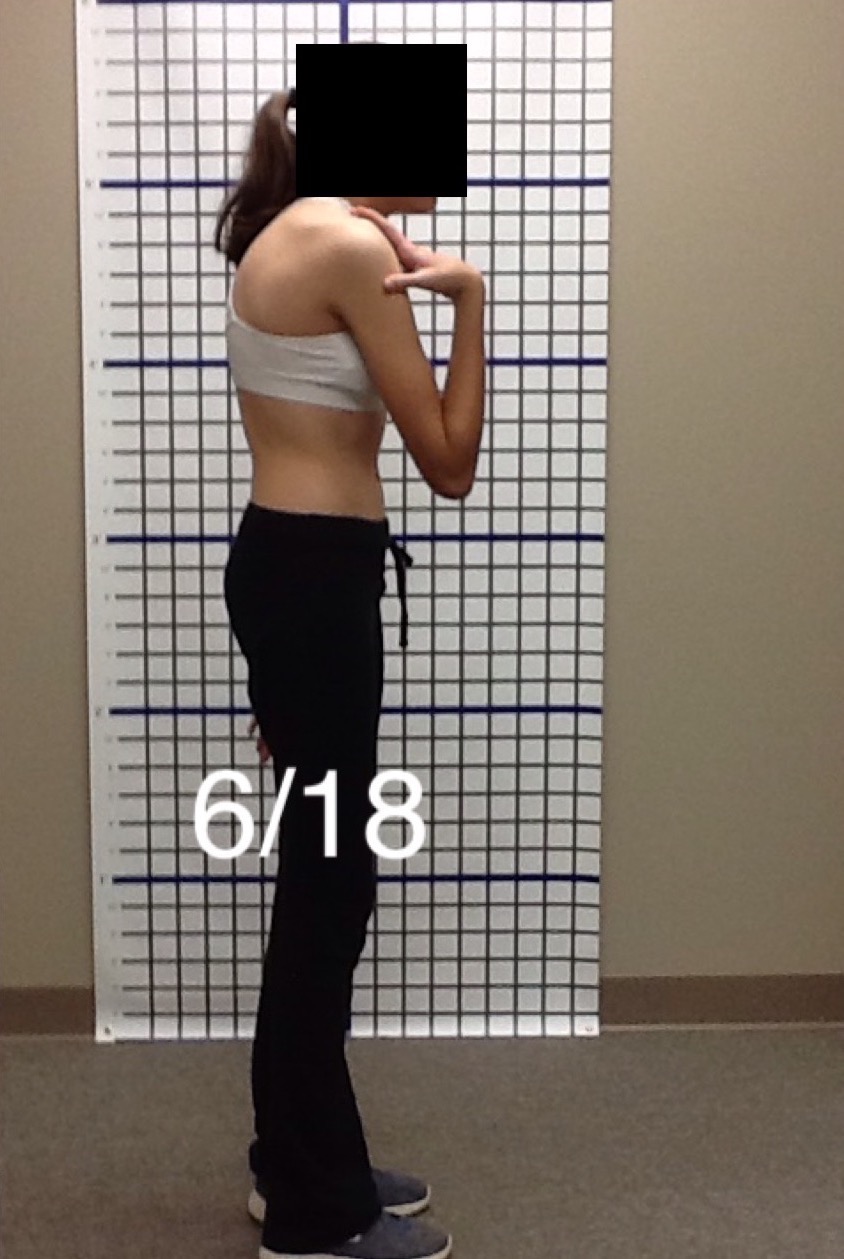
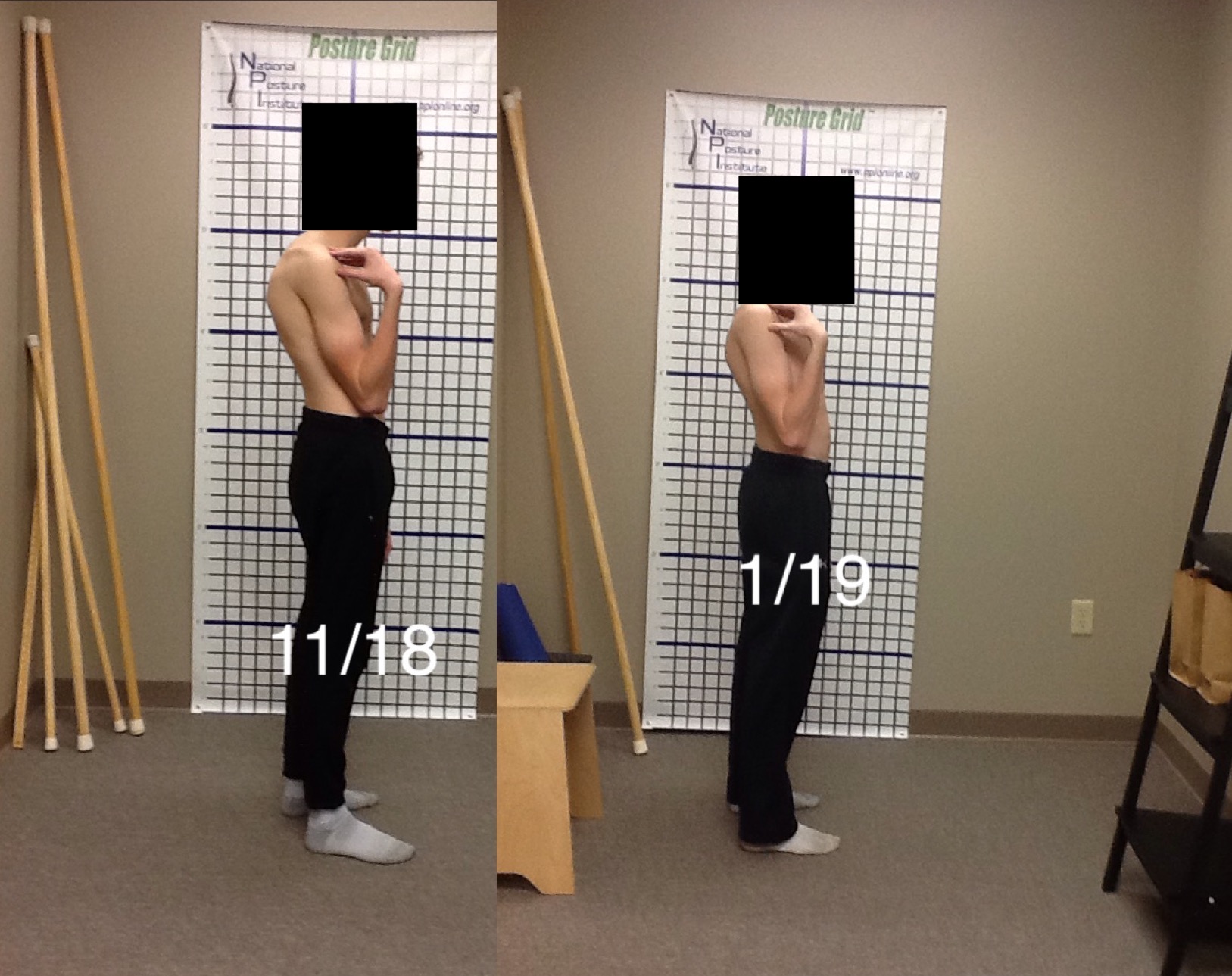
Please note the improvements in this teen and adult after Schroth training